A certification is not a single piece of paper you collect at the end of a red light therapy project. It is the shape of your market entry: each document answers a different question, is produced by a different party, and lands at a different point in the schedule. Treating them as one checkbox is how launches slip. Treating them as a sequence of gates is how they stay on plan.
What each document covers
The five items below are commonly confused because they are often mentioned in the same breath. They are not interchangeable, and none of them replaces another.
| Document | What it covers | When it enters the project |
|---|---|---|
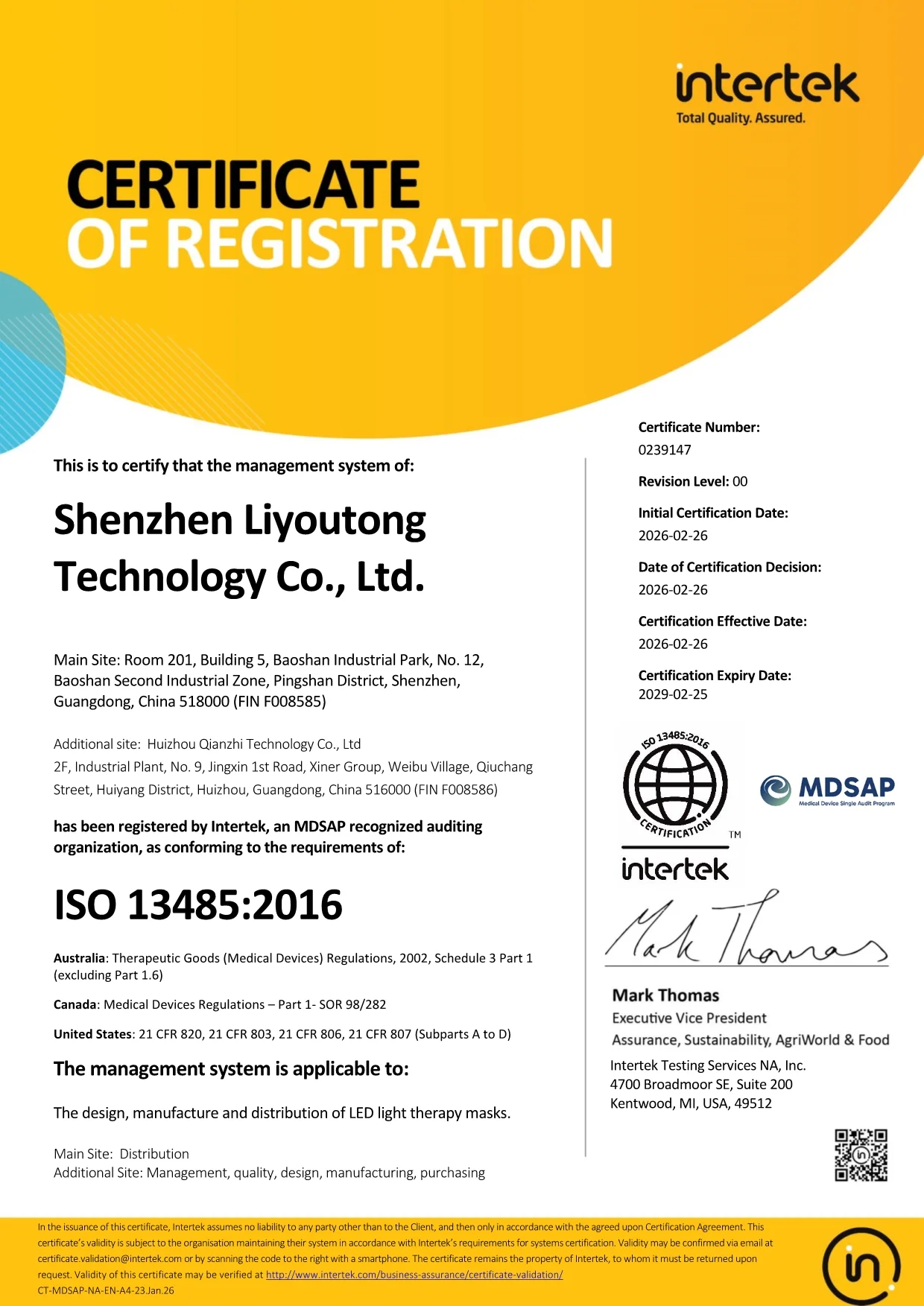
| ISO 13485 | A quality management system for medical device manufacturing — process control, documentation, traceability and corrective action across design and production. | Up front, before design freeze, because it governs how every later step is documented. |
| FDA registration | U.S. establishment registration and device listing; the applicable pathway and any premarket submission depend on the device classification and claims. | Early enough to settle the intended use and claims, and again before shipping into the U.S. market. |
| CE EMC | Electromagnetic compatibility under the EU EMC Directive — emissions and immunity of the finished device. | During hardware validation, once the enclosure and electronics are stable. |
| FCC | Radio frequency and electromagnetic interference compliance for the U.S. market, with the rule part depending on whether the device is unintentional or intentional radiator. | In parallel with CE EMC testing, using the same pre-compliance work where possible. |
| RoHS | Restriction of hazardous substances — material declarations and documentation for the bill of materials. | From the first BOM, because component choices determine whether it can be met at all. |
Reading the table left to right gives you the practical order of work: system, claims, electronics, radio, materials.
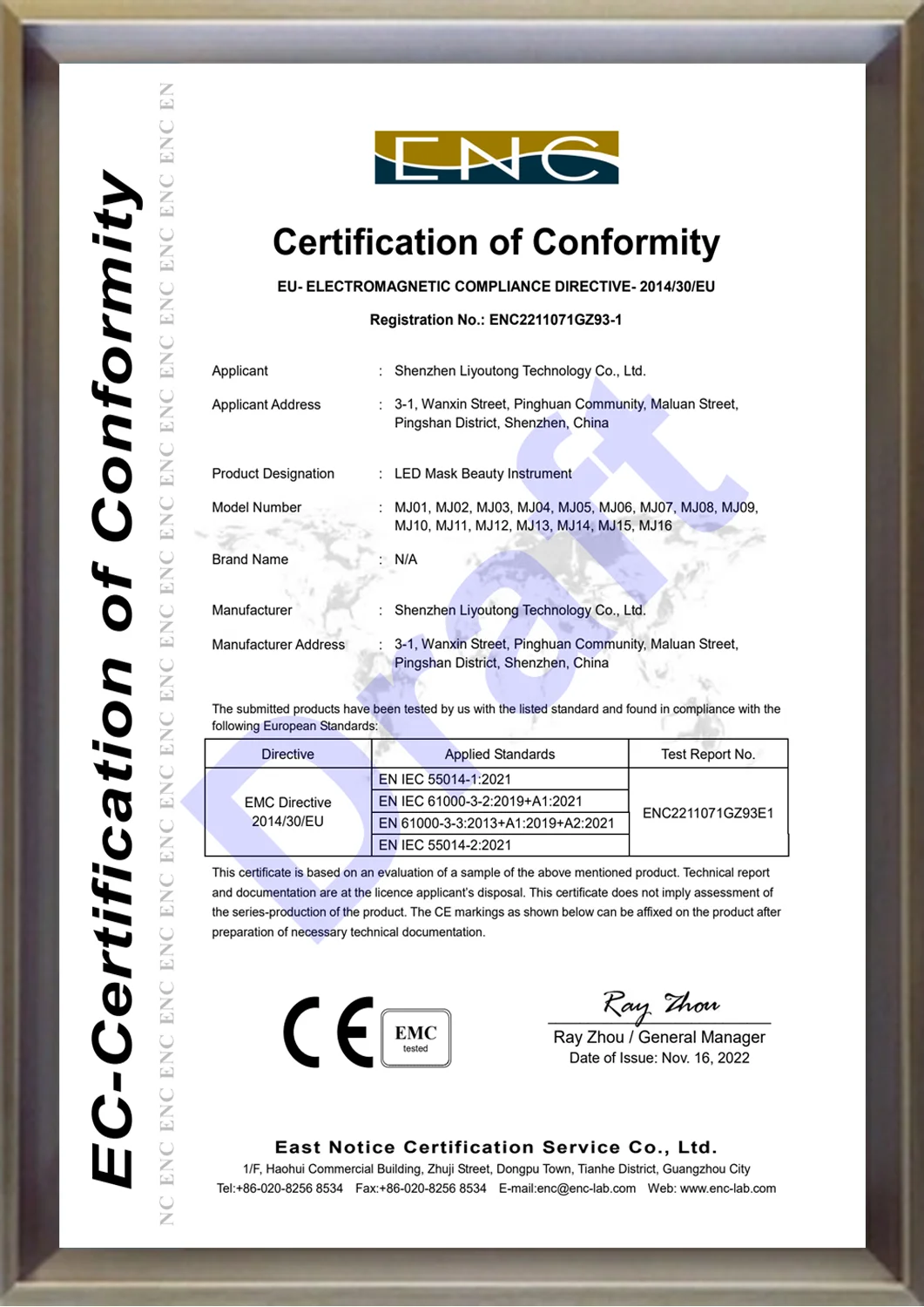
CE EMC is usually the first technical certificate a buyer asks to see, but it is a snapshot of one configuration. If the driver, LED board or enclosure changes after testing, the report may no longer describe what you ship, so the configuration tested should be the configuration produced — confirmed at sampling.
Where the timeline actually moves
Most schedule risk sits before the lab, not inside it. Intended use and claims determine the regulatory pathway, and the pathway determines what testing is even relevant. A project that locks claims late often ends up testing twice: once for the original design and again after the marketing language shifts the classification.
The second lever is documentation discipline. A quality system built for ISO 13485 produces the design history, risk file and traceability records that auditors and notified bodies expect. When those records are assembled retroactively, the review cycle stretches in a way that is hard to recover from, and the delay rarely shows up until the final gate.
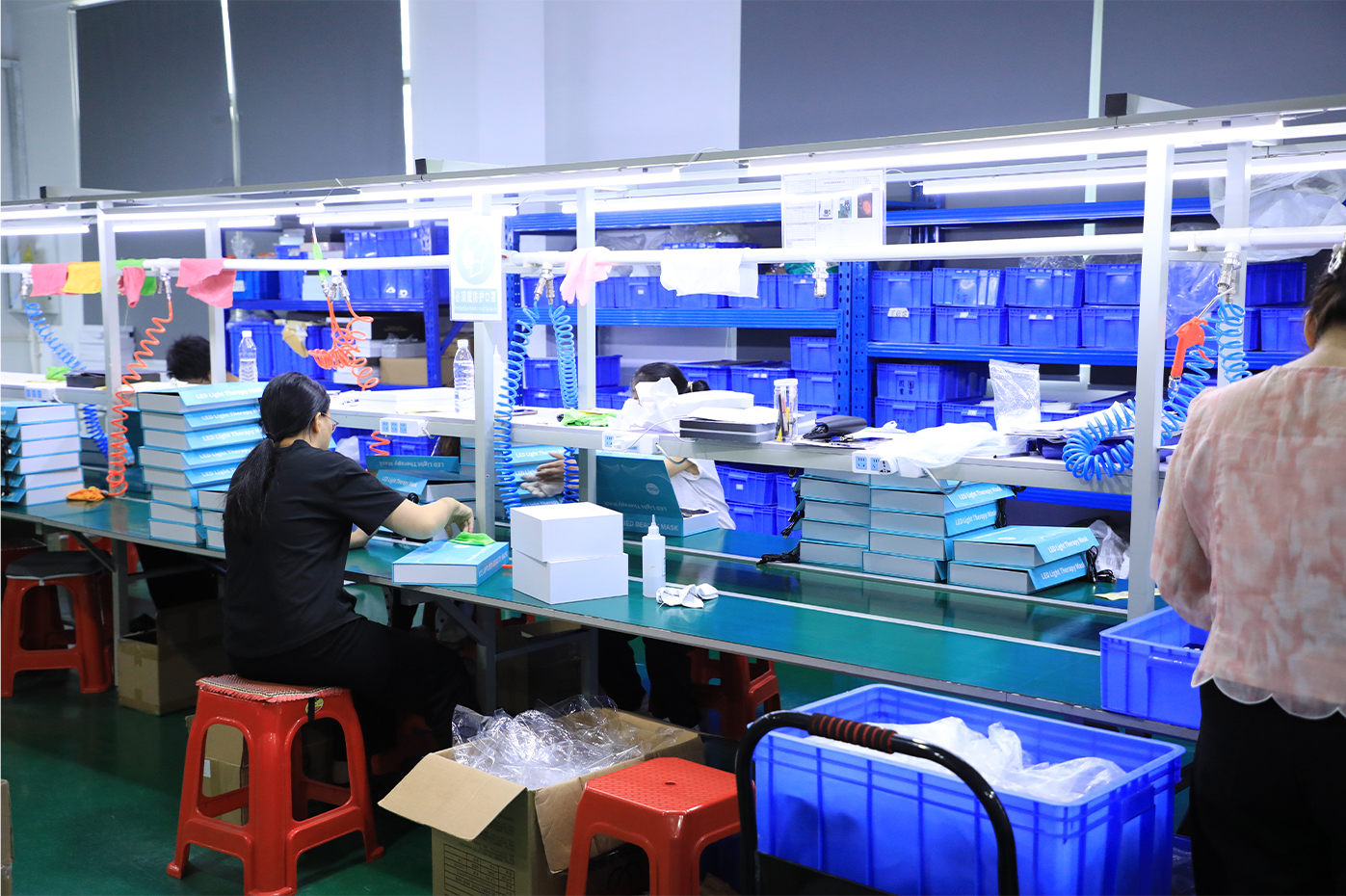
Manufacturing readiness is the third lever. A line that is already running under a documented process can support sampling, consistency checks and post-test verification without stopping production. That is why we keep engineering and production in-house across our five product lines: the people who answer certification questions are the same people who build the device.
What to send us
To scope a project accurately, we need the inputs that drive the certification plan rather than a finished specification.
- Target markets and the intended use you plan to claim, including any therapeutic wording you expect to use in marketing.
- Your current bill of materials or a reference product, so RoHS and EMC implications can be reviewed before tooling.
- Any certificates, test reports or quality system documents you already hold, including the exact configuration each one covers.
Send those three things and we can map which documents you already have, which need to be produced, and which questions have to be settled before design freeze. Timelines vary with the configuration and the markets involved, but the sequence above stays the same — and that sequence is what keeps a launch plan honest.